GRACE General Assembly in Beja: a year of progress and a look ahead
From 27 to 29 October 2026, the GRACE consortium gathered in Beja, Portugal, for its General Assembly. The meeting was hosted by CIMBAL, IPBeja, the Mértola Biological Station (EBM) and INOVA+, with sessions held at NERBE/AEBAL. The aim of the meeting was to review the project’s first year and plan the next.
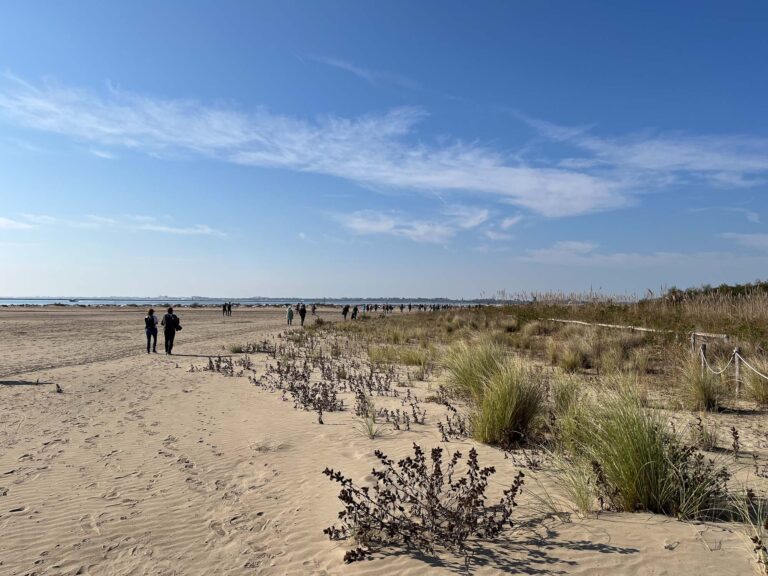
The choice of location was no coincidence. The Baixo Alentejo is one of GRACE’s five Demonstrator Regions. It is also a semi-arid Mediterranean territory facing water scarcity, desertification and extreme heat. As a result, it offered the ideal setting to see climate adaptation in practice.
Reviewing progress and planning year two
On the first and final days, partners met at NERBE/AEBAL to take stock of GRACE’s first year. Alongside progress updates from each work package, much of the agenda focused on the regions themselves. The Demonstrator Regions worked on their implementation roadmaps, while the Replicator Regions shared what could transfer to their own contexts. In addition, a roundtable brought together one representative from each region to exchange perspectives. Partners also gathered stories and quotes in a communication workshop, and open discussion time helped align priorities for year two.
Field visits: climate adaptation on the ground
On the second day, partners headed into the field. Over the course of the day, they explored four sites across the Baixo Alentejo.
- IPBeja Smart Farm: First, partners visited the Smart Farm. Here, a network of soil, water and weather sensors helps farmers make data-informed decisions on irrigation and crops. In addition, a hydroponic centre reuses treated wastewater from local agri-food industries.
- Herdade da Abóbada: Next, CCDR Alentejo introduced the montado, the region’s iconic cork and holm oak landscape. The team also presented its vulnerabilities and the initiatives underway to protect it.
- Vale do Gonçalinho Environmental Education Centre: The centre lies in the heart of the Castro Verde Special Protection Area. There, partners were welcomed by LPN, the Municipality of Castro Verde and the Associação de Agricultores do Campo Branco. Together, they showed how farming and nature conservation coexist in a unique cereal-steppe landscape.
- Mértola Biological Station: Lastly, the day ended at EBM. At this centre, applied research, territory and community come together to tackle water scarcity, desertification and climate change.
Taken together, these visits gave partners first-hand insight into climate adaptation on the ground. Above all, they showed how local authorities, farmers, researchers and conservation organisations work side by side to build resilience.
Looking ahead
Overall, GRACE leaves Beja with stronger connections across the consortium. We would like to thank CIMBAL, IPBeja and EBM for their warm hospitality. We are also grateful to NERBE/AEBAL for hosting our sessions. Finally, thank you to all the organisations that opened their doors to us during the field visits.
Photos: © CIMBAL – Comunidade Intermunicipal do Baixo Alentejo (Intermunicipal Community of Baixo Alentejo).